April showers bring flooded basements — a reality we see firsthand every spring at Peterman Brothers. If you live in the Midwest, especially across Indiana, Ohio, or Kentucky, now is the time to prepare your home for heavy rainfall. One of the most effective ways to prevent water damage and protect your basement is with a properly installed sump pump.
In this guide, we’ll break down everything homeowners need to know about sump pump installation — from how these systems work to which type is best for your home, and why April is the ideal time to act.
Why April Is Prime Time for Sump Pump Installation
Every year, the Midwest sees a surge in rainfall starting in early spring. Snowmelt, rising groundwater, and spring storms create the perfect storm for basement flooding. By the time April hits, many homeowners are already dealing with moisture — or worse, standing water.
At Peterman Brothers, we install hundreds of sump pumps each year. Most emergency calls come in April and May — often after it’s too late. That’s why we recommend scheduling sump pump installation now, before the next big downpour.
What a Sump Pump Does (And Why You Need One)
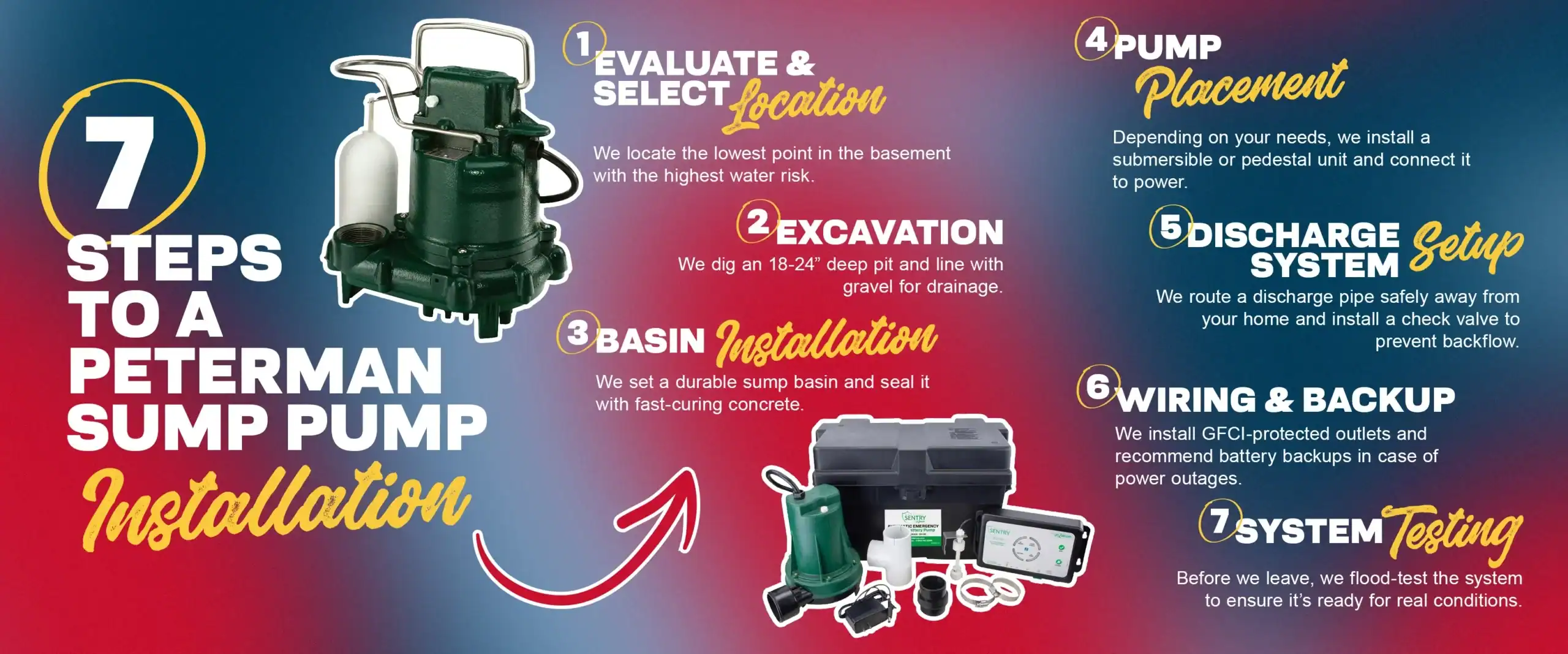
A sump pump is a simple yet powerful system that removes water from your basement. Here’s how it works:
- Sump Basin: A pit is dug in the basement’s lowest point to collect groundwater or floodwater.
- Float Switch: A float triggers the pump to activate automatically as water rises.
- Pump Motor: As water rises, the motor powers an impeller that pushes water through a pipe.
- Discharge Line: Water is sent safely away from your foundation to a designated drainage area.
Without a sump pump, water collects under your slab, seeps into walls, and can lead to mold, foundation damage, and expensive restoration work.
Types of Sump Pumps — Which One Is Right for Your Home?
Not all sump pumps are the same. At Peterman Brothers, we install two main types:
1. Submersible Sump Pumps
How it works: These pumps are fully submerged in the sump basin. They combine the motor and impeller in one sealed unit. The float switch sits on top, activating when water levels rise.
Why we recommend it: Submersible pumps are extremely quiet and powerful. They are perfect for homes with frequent water infiltration and work best in finished basements or high-risk areas.
Advantages:
- Quiet operation
- Higher gallon-per-minute pumping capacity
- Space-saving design
2. Pedestal Sump Pumps
How it works: The motor is on a tall pedestal above the basin, while a shaft extends into the pit. When water rises, a float on the shaft triggers the pump.
Why we recommend it: These pumps are easier to service and ideal for homes with light water issues or unfinished basements.
Advantages:
- Lower upfront cost
- Easy maintenance
- Ideal for less frequent use
Side-by-Side Comparison:
| Feature | Submersible | Pedestal |
| Placement | Inside the sump pit | Motor above the pit |
| Noise Level | Very quiet | Louder |
| Power | Higher capacity | Moderate capacity |
| Maintenance | Less accessible | Easy access to the motor |
| Best For | Frequent water issues | Occasional flooding |
Why the Midwest Needs Sump Pumps in Spring
Midwestern homes are especially vulnerable in April due to:
- High water tables
- Clay-heavy soil that doesn’t drain easily
- Older homes without perimeter drains
- Sudden spring storms and melting snow
Installing in early April allows the system to settle before peak rainfall, giving you peace of mind all season long.
Common Sump Pump Mistakes We’re Called to Fix
Every spring, we get calls from homeowners who attempted a DIY sump pump installation or hired a handyman. Here are the most common issues we see:
- No check valve (causing the pump to cycle endlessly)
- Discharge pipe dumping water too close to the foundation
- Undersized pump not keeping up with the flow rate
- Improper electrical setup (non-GFCI outlets)
- No backup system for power outages
Our advice? Always hire a licensed plumbing team with sump pump experience — especially in flood-prone regions.
Post-Installation Maintenance Tips
Once your sump pump is installed, here’s how to keep it working smoothly:
- Quarterly Testing: Pour water into the basin and ensure the pump activates.
- Battery Backup Check: Replace every 2–3 years or when the voltage drops.
- Discharge Inspection: Make sure water exits 10+ feet from the home and isn’t clogged.
Want extra peace of mind? Ask us about our annual maintenance plans.
Why Midwest Homeowners Trust Peterman Brothers
With decades of experience and a reputation for clean, code-compliant installs, Peterman Brothers is the name homeowners trust. We’ve completed thousands of sump pump installations across Indiana, Ohio, and Kentucky — and we’ve seen just about every basement challenge there is.
Whether you need a brand-new system or a professional upgrade, we’re ready to help.
Schedule Your Sump Pump Installation Today
Don’t wait until the next storm hits to get your sump pump installed by the pros who know the Midwest best.
👉 Book Your Installation Now
👉 Explore Our Full Plumbing Services