Why Choosing the Right Furnace Filter Matters
Effects on HVAC Performance, Efficiency & Energy Bills
Your furnace filter isn’t just a dust trap—it directly affects how well your HVAC system runs.
A clogged or incorrect filter can restrict airflow, causing your system to overwork and increasing energy use by up to 15%.
How Furnace Filters Impact Indoor Air Quality (IAQ)
Filters capture dust, dander, and allergens before they circulate through your home.
The better the filter, the fewer airborne irritants linger—especially important for allergy sufferers and households with pets.
Consequences of Using the Wrong Filter Type
Using the wrong size or an overly restrictive filter can damage your blower motor, decrease efficiency, and reduce your system’s lifespan.
Correct fit and rating are essential for both safety and performance.
Step-by-Step: How to Choose the Best Furnace Filter
Step 1: Find the Correct Filter Size
Where to Find Furnace Filter Size
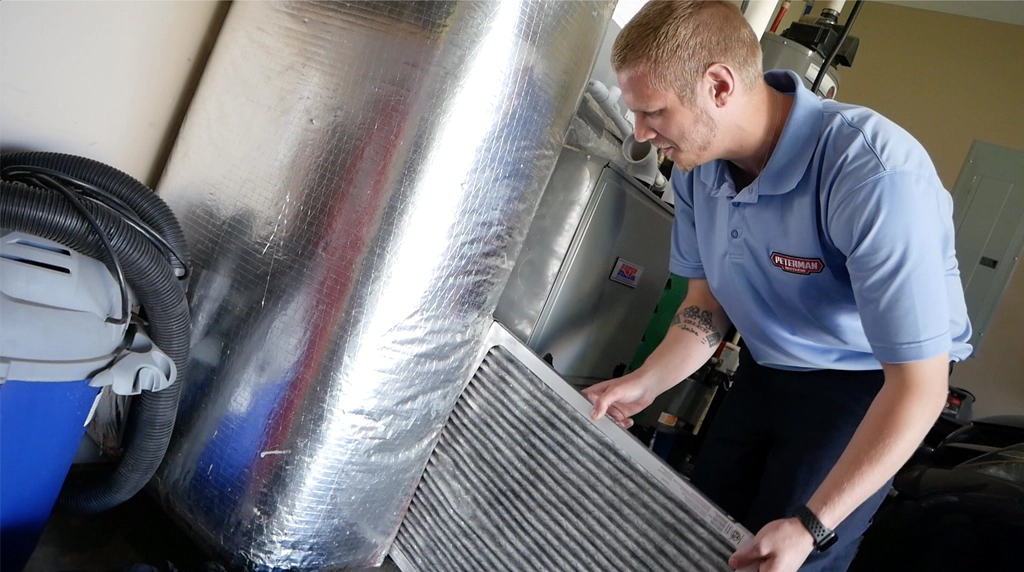
Check the edge of your old filter—it typically lists the dimensions (e.g., 16×25×1).
No label? Measure the opening where the filter sits.
Why Exact Fit Matters
An ill-fitting filter leaves gaps that let dust bypass filtration.
Always match your system’s required size exactly to maintain airflow efficiency and protect internal components.
Step 2: Understand MERV Ratings (1–16+)
What MERV Ratings Mean
MERV (Minimum Efficiency Reporting Value) measures how well a filter captures particles:
- MERV 1–4: Basic protection
- MERV 5–8: Ideal for most homes
- MERV 9–12: Better for pets/allergies
- MERV 13+: Medical-grade—usually too restrictive for residential units
Best MERV Ratings by Home Type
Most homes perform best with MERV 8 or MERV 11 filters—strong enough to trap allergens, gentle enough on your system.
When High MERV Filters Cause HVAC Strain
Using a MERV 13+ filter in a standard furnace can reduce airflow and increase wear.
Unless your HVAC system is rated for it, avoid ultra-high MERVs.
Step 3: Avoid Overhyped or Problematic Filters
Scented, Reusable, and Gimmicky Filters to Skip
- “Odor-reducing” and “fragrance-infused” filters often mask issues rather than solve them.
- Washable filters can trap moisture, which can lead to mold.
- High-MERV filters may cause more harm than good.
Why Pleated Filters Are the Best Value
Pleated filters balance cost, performance, and durability.
They capture fine particles without reducing airflow, making them ideal for long-term system health.
What to Avoid
Don’t bend or force the filter. Avoid loose installs, which allow dust to bypass the filter entirely.
When to Replace Your Furnace Filter
Filter Lifespan by Thickness
- 1–2 inch filters: Replace every 1–3 months
- 3–4 inch filters: Every 6–9 months
- 5–6 inch filters: Every 9–12 months
Replacement Frequency for Pets, Allergies, and Heavy Use
If you have pets, allergy concerns, or high usage, change filters more often.
Monitor for visible dirt or reduced airflow.
Signs Your Filter Needs Replacing
- Dust around vents
- Higher energy bills
- A visibly gray or clogged filter
- Reduced airflow or strange furnace sounds
Make It Easy: Join a Furnace Filter Delivery Program
What Is the Filter Saver Club?
A subscription service that delivers the exact filter size and rating you need on a custom schedule.
Benefits of Scheduled Filter Delivery
- Healthier Air at Home
Reduce allergens like dust, pollen, pet dander, & mold spores. - Time-Saving Convenience
Delivered to your door. Choose the best frequency and filters for your home. - Most Competitive Pricing
Affordable options to find the perfect filters for your budget and lifestyle. - Preventive Maintenance
Clean filters help your HVAC system run its best and avoid early wear and tear.
How to Subscribe
Visit FilterSaverClub.com and enter your filter size and frequency.
Set it and forget it.
FAQ: Furnace Filter Tips You Won’t Find on the Label
What’s the difference between pleated and fiberglass filters?
Fiberglass filters are cheaper but less effective—they only trap larger particles, such as lint or hair.
Pleated filters use denser material to catch smaller allergens, dust, and even mold spores.
Can I vacuum and reuse a disposable filter in a pinch?
It’s not recommended. Vacuuming damages the filter media and compromises its integrity.
It may look cleaner, but it won’t trap fine particles effectively after being vacuumed.
Are HEPA filters good for furnaces?
HEPA filters offer excellent filtration but are generally not compatible with standard residential HVAC systems due to high airflow resistance.
Use only if your system supports HEPA explicitly or has a bypass unit.
Final Takeaway
Best Practices for Furnace Filter Maintenance
Choosing the right furnace filter—and replacing it on time—is one of the easiest ways to protect your HVAC system, lower energy bills, and improve your home’s air quality. If you have any questions or need help installing yours, feel free to reach out.
Long-Term Benefits for Your System and Wallet
Want to take the guesswork out of it?
The Filter Saver Club delivers your filters on time, every time—so your system (and lungs) can breathe easy.