Ever wonder why your soap won’t lather, dishes get spotted, and your hair feels like straw after a shower? It might be hard water wreaking havoc on your home! It is important to understand your home’s water and the solutions to keep it healthy.
In this article we’ll cover:
1. What is Hard Water and how it affects you and your home
2. How a Water Softener works to remove hard water
3. How a Water Conditioner works
4. Choosing the Right Water Treatment System for Your Home
What is Hard Water?
Before discussing the solutions, let’s discuss hard water and how it affects you. Hard water contains high levels of calcium and magnesium, two minerals that can cause various problems.
Here’s a deeper dive into the myriad ways hard water can influence your life and living space:
Impact on Household Appliances and Plumbing
Scale Buildup
Hard water contains high levels of calcium and magnesium, which can precipitate out and form scale when heated. This scale can accumulate on the heating elements of appliances like water heaters, reducing their efficiency and lifespan. It can also build up in pipes, reducing flow rates, increasing pressure, and eventually leading to costly repairs or replacements.
Appliance Efficiency
Appliances that use water, such as dishwashers and washing machines, have to work harder in hard water. This not only increases energy and water usage but also necessitates more frequent repairs and shortens the appliances’ lifespan.
Laundry Issues
Hard water can make laundry challenging. Clothes washed in hard water can come out stiff and dingy. The minerals in the water can react with detergents, reducing their effectiveness, so you’ll need to use more detergent to get your clothes clean.
Impact on Personal Health and Well-Being
Skin and Hair
Hard water can significantly impact your skin and hair. The excess minerals in the water can strip moisture from your skin, leading to dryness, irritation, and exacerbation of skin conditions like eczema. As the minerals build up on the strands and scalp, hard water can leave hair feeling filmy and straw-like.
Soap and Shampoo Effectiveness
The minerals in hard water can react with soap to form a scum, reducing the soap’s lathering ability. This means you end up using more soap and shampoo, which costs more and can leave a residue on your skin and hair.
Aesthetic and Daily Living Impacts
Staining and Residue
Hard water can stain plumbing fixtures, toilets, sinks, and bathtubs. These stains can be challenging to remove and make your home look unkempt. Additionally, dishes and glassware can come out of the dishwasher spotted and filmy, requiring additional hand washing or rinsing.
Taste and Smell
While hard water is safe to drink, some people might not like the taste because of its high mineral content. The taste can vary depending on the levels of calcium and magnesium in it. Some might find it a bit more bitter or metallic than soft water.
Environmental Consideration
The increased use of detergents and energy to heat water and run appliances more frequently or for longer cycles contributes to more significant environmental impacts. The salts used in some water softeners can also end up in the water supply, posing challenges for water treatment and ecosystem health.
How does a Water Softener work to remove hard water?
Water softeners tackle hard water by employing a process known as ion exchange. This process removes the minerals that cause water hardness, primarily calcium and magnesium.
Ion Exchange Process
A tank filled with resin beads charged with sodium ions is at the heart of a water softener. As hard water flows through the resin tank, the calcium and magnesium ions in the water are attracted to and adhere to the resin beads, effectively being exchanged for sodium ions. This process removes the hardness-causing minerals from the water, making it soft.
Regeneration Cycle
Over time, the resin beads become saturated with calcium and magnesium ions. The water softener enters a regeneration cycle to clean the beads. During regeneration, a strong brine solution is flushed through the resin tank. The high sodium concentration in the brine displaces the calcium and magnesium on the resin beads, renewing their ability to soften water. The displaced minerals are then flushed out of the system.
Control Systems
Modern water softeners have automated control systems that initiate the regeneration process based on water usage or time. This ensures the system works efficiently and minimizes user intervention.
How does a Water Conditioner work to remove hard water?
Water conditioners, unlike softeners, do not remove hardness minerals from the water. Instead, they alter the minerals’ physical properties, making them less likely to adhere to surfaces and cause scale.
Physical Water Conditioning
There are several types of water conditioners, but most operate by changing the physical behavior of the hardness minerals.
For instance, template-assisted crystallization (TAC) conditioners transform dissolved minerals into microscopic crystals that flow freely through the water without sticking to surfaces.
Electromagnetic and Magnetic Systems
Some conditioners use magnetic or electromagnetic fields to alter the mineral properties. The theory is that these fields change the ionic charge of the minerals, reducing their ability to form scale.
Catalytic Media
Conditioners with catalytic media induce a physical change in the minerals through a process known as nucleation, where the minerals form tiny, stable crystals in the water. These crystals are too small to adhere to surfaces and thus prevent scaling.
No Salt or Chemicals
One significant advantage of water conditioners is that they do not require salt or chemicals to operate. This is beneficial for those who are concerned about sodium intake or environmental impact.
Maintenance and Efficiency
Water conditioners generally require less maintenance than softeners, as there are no salt tanks to refill or resin to regenerate. They are considered environmentally friendly as they do not produce wastewater or add salts to the water system.
Choosing the Right Water Treatment System for Your Home
A water softener might be the best choice if your primary concern is scaling due to hard water. A water conditioner might be more suitable if you’re looking for a solution that retains the mineral content of your water or addresses other water quality issues.
Installation and Maintenance
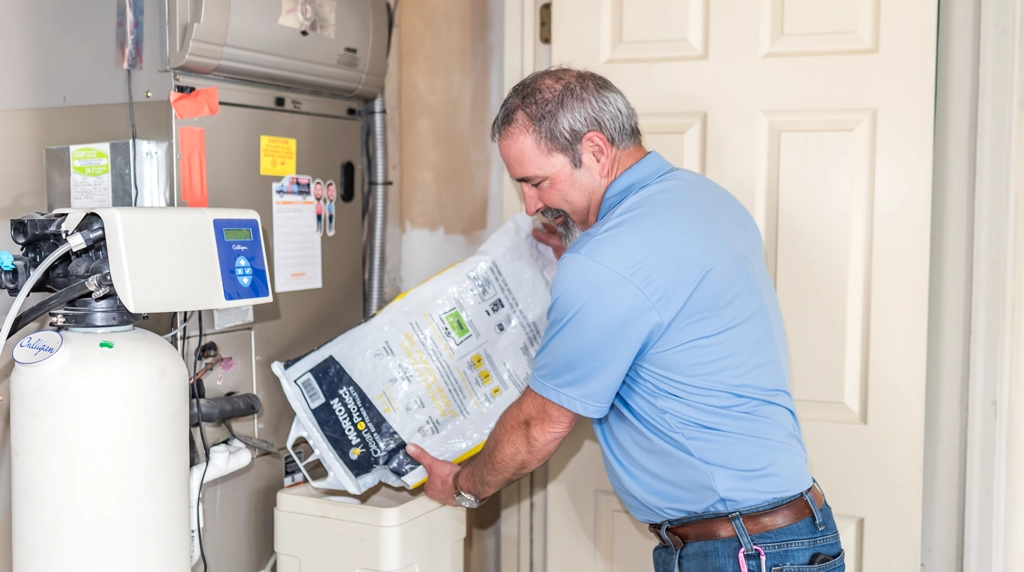
Both water softeners and conditioners require an initial investment and ongoing maintenance. Water softeners typically need regular salt refills, while water conditioners might require less frequent maintenance, depending on the technology.
It’s also important to consider the long-term cost, as water treatment efficiency can impact utility bills and appliance lifespans.
Environmental Considerations
Another factor to consider is the environmental impact. Water softeners can produce wastewater and add sodium to the environment, which can be a concern in some areas.
Water conditioners, especially those that don’t use chemicals or salt, are often touted as more environmentally friendly options.
Conclusion
Whether you choose a water softener or a water conditioner, selecting a system that addresses your specific water quality issues and fits your lifestyle and values is key. Consulting with a water treatment specialist can provide tailored advice and ensure you make an informed decision. By understanding the nuances of water treatment, you can ensure that your home has clean, safe, and effective water for all your needs.