A storm may be brief, but it can leave lasting damage.
Sometimes, the damage is easy to spot, like when a branch knocks down a line, the power goes out, or something stops working. But a lot of electrical damage is harder to notice. Power surges, water getting in, or lightning nearby can cause problems that only show up later. Lightning can travel through your wiring or plumbing and harm your home, even if it doesn’t hit directly.
That’s why it is important to know the warning signs after a storm.
Here are seven signs your home may have electrical damage.
1. Breakers Keep Tripping, Or One Won’t Reset
If a breaker trips after a storm, it usually is not just a coincidence.
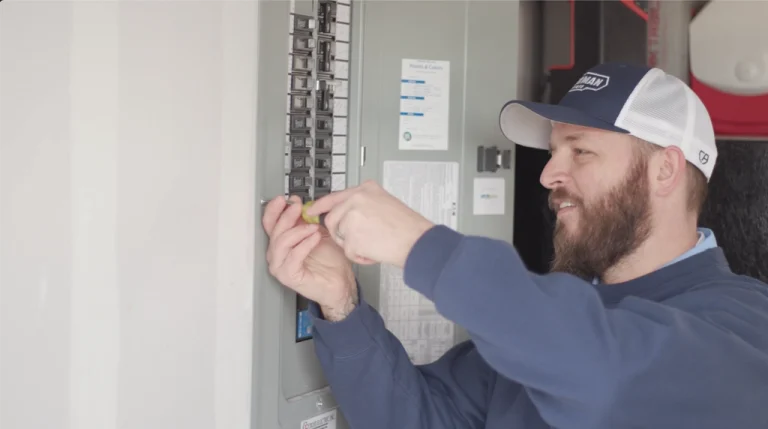
Breakers are there to protect your home. If one keeps tripping or won’t reset, there could still be a problem with the circuit. Things like voltage surges, water, or damaged wiring can cause these issues to continue. The CPSC says any wiring, breakers, or fuses that got wet should be checked by a professional before you use them again.
One trip might not be a big deal, but if it keeps happening, it matters.
Pay attention to:
- It resets, then trips again later.
- Part of the house lost power and never fully came back on.
- The panel feels damp, smells odd, or shows visible damage.
2. Lights Flicker, Dim, Or Act Strangely
Storm damage doesn’t always mean the power has to go out. Sometimes, it just makes things act strangely.
If your lights flicker, dim, or pulse, it could mean there’s a wiring problem or a circuit is overloaded or damaged. Flickering or dimming lights are a warning sign of a serious wiring issue, especially if you notice other problems too.
This is especially important if these problems start right after a storm or power outage.
Watch for:
- Lights that pulse when large appliances run.
- Rooms that seem dimmer than usual.
- Lamps or fixtures that blink for no clear reason.
- Electronics that restart, lose settings, or behave oddly after a storm.
3. Outlets Or Switches Feel Warm, Smell Burnt, Or Look Discolored
If outlets feel warm, you smell something burnt, or you see dark marks around switches, it could mean there is heat, arcing, or damaged wiring. These are signs of serious electrical problems.
Do not ignore these signs or just wait to see if they go away.
Stop and act if you notice:
- Brown or black marks on an outlet cover.
- Melted plastic.
- A hot switch plate.
- A sharp burning smell near an outlet, panel, or appliance.
3. Outlets Or Switches Feel Warm, Smell Burnt, Or Look Discolored
Electricity should not make noise.
A quiet buzz from some devices can be normal. But if you hear loud buzzing, crackling, or sizzling from walls, outlets, panels, or switches, that’s not normal. These sounds could mean there are loose connections or broken parts.
5. GFCI Outlets Keep Tripping Or Won’t Reset
GFCIs are designed to trip when they detect a ground fault or leakage current. If one keeps tripping after a storm, it may mean moisture got where it shouldn’t, or that a device or part of the circuit’s been damaged.
This doesn’t always mean you need a repair, but it does show there is a problem.
Common post-storm clues:
- The outdoor outlet stopped working.
- The garage or basement outlet won’t reset.
- Bathroom GFCI trips for no clear reason.
- One exterior circuit is dead after heavy rain.
6. Water’s Reached Your Home’s Electrical
Water and electricity are always a dangerous mix.
It’s not only a flooded basement you need to worry about with storms. Moisture from them can cause trouble in places you might not expect.
Check if water reached any of these areas:
- The electrical panel.
- Outlets or extension cords.
- Outdoor receptacles.
- Crawl spaces.
- Appliances in a basement or garage.
- Sump pump or utility area wiring.
Even if things look dry, water exposure can still cause hidden damage and risks.
7. Visible Outside Damage
Storms can damage anything attached to the exterior, such as the service line, meter area, mast, exterior disconnect, or outdoor outlets. Sometimes, power lines may be down nearby. Always assume downed lines are live, stay at least 35 feet away, and call 911, says ESFI.
Stay a safe distance away from damaged wires, metal, or standing water.
Look from a safe distance for:
- Pulled or loose service lines.
- Bent or damaged mast components.
- Broken exterior fixtures.
- Scorch marks near the meter or disconnect.
- Tree limbs on or near electrical lines.
- Standing water near outdoor electrical equipment.
Next Steps
If you notice one of these signs after a storm, don’t ignore it.
Stop using anything that seems damaged. Most issues are hidden behind walls, inside outlets, or in parts of the system you cannot safely inspect on your own.
If something hasn’t felt right since the storm, reach out to our team. We can help you get answers, understand what’s going on, and move forward with a safe plan for your home.
If you know what to look for, you can catch problems early, avoid expensive repairs, and keep your home and family safer after a storm.
The storm passed. But the electrical damage may just be getting started.
A storm may be brief, but it can leave lasting damage. Sometimes it’s easy to spot — a branch knocks down a line, the power goes out, or something stops working. But a lot of electrical damage is harder to notice. Power surges, water intrusion, or nearby lightning can cause problems that only surface later. Lightning can even travel through your wiring or plumbing and harm your home without ever directly striking it.
That’s why it’s important to know the warning signs after a storm.
Warning Signs
To check after any storm
35 ft
Safe Distance
From any downed power line
Call First
If you see a downed line
Peterman
Emergency electrical
If something hasn’t felt right since the storm — trust that instinct. Hidden electrical damage is the most dangerous kind.
The Checklist
7 Signs Your Home May Have Electrical Damage
Sign
Breakers Keep Tripping, or One Won’t Reset
High Concern
If a breaker trips after a storm, it usually isn’t just a coincidence. Breakers exist to protect your home — if one keeps tripping or refuses to reset, there may still be a problem on the circuit from voltage surges, water, or damaged wiring. The CPSC warns that any wiring, breakers, or fuses exposed to water should be inspected by a professional before being used again.
⚠ Pay attention if
- It resets, then trips again later
- Part of the house lost power and never came back
- The panel feels damp or smells odd
- The panel shows visible damage
Sign
Lights Flicker, Dim, or Act Strangely
Investigate
Storm damage doesn’t always cut your power — sometimes it just makes things act strange. If your lights flicker, dim, or pulse, it can point to a wiring problem, an overloaded circuit, or damaged equipment. Flickering lights are an early warning of serious wiring issues, especially when paired with other problems.
⚠ Watch for
- Lights that pulse when appliances run
- Rooms that seem dimmer than usual
- Lamps that blink for no clear reason
- Electronics restarting or losing settings
Sign
Outlets or Switches Feel Warm, Smell Burnt, or Look Discolored
Stop & Act
If outlets feel warm, you smell something burnt, or you notice dark marks around switches — that’s a sign of heat, arcing, or damaged wiring. These are serious electrical problems. Don’t wait to see if they go away.
🛑 Stop and act if you see
- Brown or black marks on an outlet cover
- Melted plastic
- A hot switch plate
- A sharp burning smell near an outlet
Sign
Buzzing, Crackling, or Sizzling Sounds
High Concern
Electricity should not make noise. A faint hum from some appliances is normal, but loud buzzing, crackling, or sizzling coming from walls, outlets, panels, or switches is not. These sounds usually mean loose connections or damaged components — and both can escalate quickly.
⚠ Listen for
- Buzzing from inside walls
- Crackling from an outlet or switch
- Sizzling near the electrical panel
- Any new noises since the storm
Sign
GFCI Outlets Keep Tripping or Won’t Reset
Investigate
GFCI outlets are designed to trip when they detect a ground fault or leakage current. If one keeps tripping after a storm, moisture may have reached somewhere it shouldn’t, or a device on the circuit was damaged. It doesn’t always mean a repair — but it always means something is off.
⚠ Common post-storm clues
- Outdoor outlet stopped working
- Garage or basement outlet won’t reset
- Bathroom GFCI trips for no reason
- One exterior circuit dead after rain
Sign
Water Reached Your Home’s Electrical
Stop & Act
Water and electricity are always a dangerous mix. A flooded basement is the obvious concern — but storm moisture can reach places you wouldn’t expect. Even if things look dry afterward, exposure can leave hidden damage and hidden risks.
💧 Check if water reached
- The electrical panel
- Outlets or extension cords
- Outdoor receptacles
- Crawl spaces
- Basement or garage appliances
- Sump pump or utility wiring
Sign
Visible Damage Outside
High Concern
Storms can damage anything attached to your home’s exterior — the service line, meter, mast, exterior disconnect, or outdoor outlets. Keep a safe distance from damaged wires, twisted metal, or standing water near equipment.
Downed Power Lines: Always Assume They’re Live
Stay at least 35 feet away and call 911, according to ESFI. Never approach, touch, or try to move anything near a downed line.
👁 Look from a safe distance for
- Pulled or loose service lines
- Bent or damaged mast components
- Broken exterior fixtures
- Scorch marks near the meter
- Tree limbs on electrical lines
- Standing water near equipment
What to Do Next
Don’t Ignore the Warning Signs
Stop using anything that seems damaged. Most electrical issues hide behind walls, inside outlets, or in places you can’t safely inspect yourself. If something hasn’t felt right since the storm, we can help.
Schedule an Inspection →
📞 (317) 830-5870
Our Team Will
- Inspect your panel and wiring
- Test outlets, switches, and GFCIs
- Check for water-damaged components
- Provide a safe plan forward
Know the signs. Catch problems early. Keep your home and family safer after every storm.